Non-Invasive Leak Detection Methods in Austin
A lot of homeowners assume finding a leak means tearing up a floor or digging up a yard before anyone even knows where to look. In most cases, that is not how it works. Non-invasive methods are used first, specifically to avoid unnecessary cutting or digging.
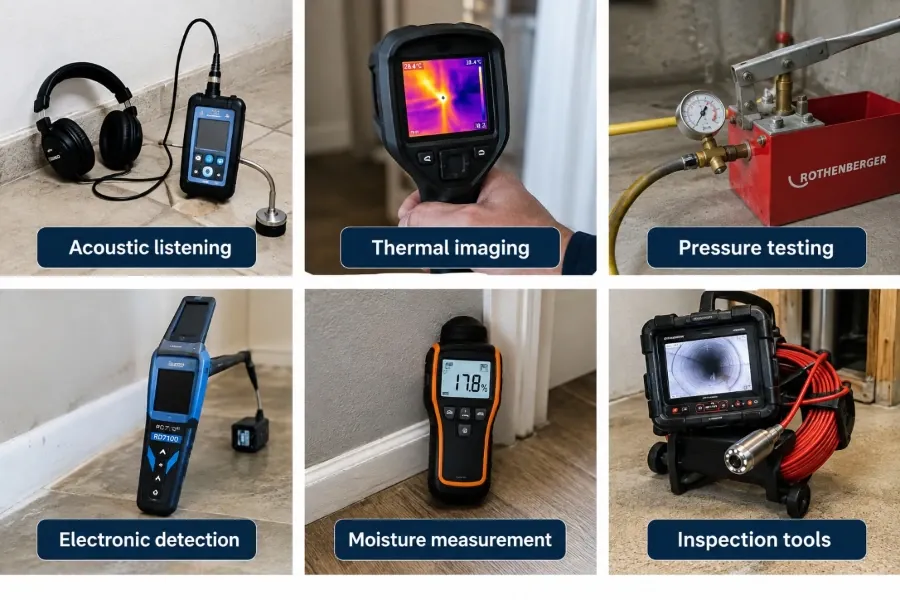
Methods We Use Before Anything Gets Opened
Acoustic leak detection
Specialized listening equipment picks up the distinct sound leaking water under pressure makes, even through concrete or soil, and helps triangulate its location. It is effective but not infallible, which is why it is often paired with a second method.
Ground microphones & listening rods
Used to amplify and pinpoint sound at specific surface points once acoustic listening has narrowed the general area.
Pressure testing
Isolating sections of a plumbing system and monitoring pressure drop to identify which section is affected.
Hydrostatic pressure testing
A specific pressure-based method for testing sealed sections of line, useful for confirming a leak's presence and general area before any invasive step.
Thermal and infrared imaging
Can reveal temperature differences on a surface caused by a hot or cold water leak underneath, often used on slab leaks involving a hot water line.
Line tracing & tracer probes
Following the physical path of an underground line to correlate location with an acoustic or pressure finding.
Tracer gas detection
Introducing a safe, detectable gas into a line and tracing where it escapes to the surface, useful on certain sealed sections where acoustic methods alone are inconclusive.
Confirm First, Cut Only If Needed
Every method above is used specifically to confirm a leak's location before any slab cutting or digging happens, not after. That sequencing is the whole point, and it is the difference between an accurate, targeted repair and an expensive guess.
Why We Do Not Rely on Just One Method
No single method above is foolproof on its own. Acoustic listening can be thrown off by background noise or unusually deep pipe placement. Thermal imaging only shows a usable temperature difference under the right conditions. Pressure testing confirms that a section is affected without necessarily pinpointing the exact spot by itself. That is why cross-confirming a finding with a second method before marking a repair location is standard procedure on every job, not an extra step that costs more. It is the difference between a confident, targeted repair and a guess that happens to come with a receipt.
Frequently Asked Questions
Is non-invasive detection as accurate as cutting open a wall or slab to look?
In most cases, yes, when done with the right equipment and a second method to confirm the first finding. Accuracy depends on leak size, pipe depth, and background noise.
Which method do you use first?
It depends on the situation, but acoustic listening and a meter and shutoff test are usually the starting point, with pressure testing, thermal imaging, or line tracing used to confirm from there.
Want Leak Detection That Does Not Start With a Sledgehammer?
Call (737) 439-3888 and we will walk you through the right method for your situation.
Call (737) 439-3888