Residential Leak Detection in Austin, TX
Leaks happen in plenty of places besides under the foundation. A failing water heater connection, an aging irrigation line, a slow leak behind a wall, or a fixture that has been dripping into a wall cavity longer than anyone noticed. We bring the same test-before-you-cut approach to all of it.
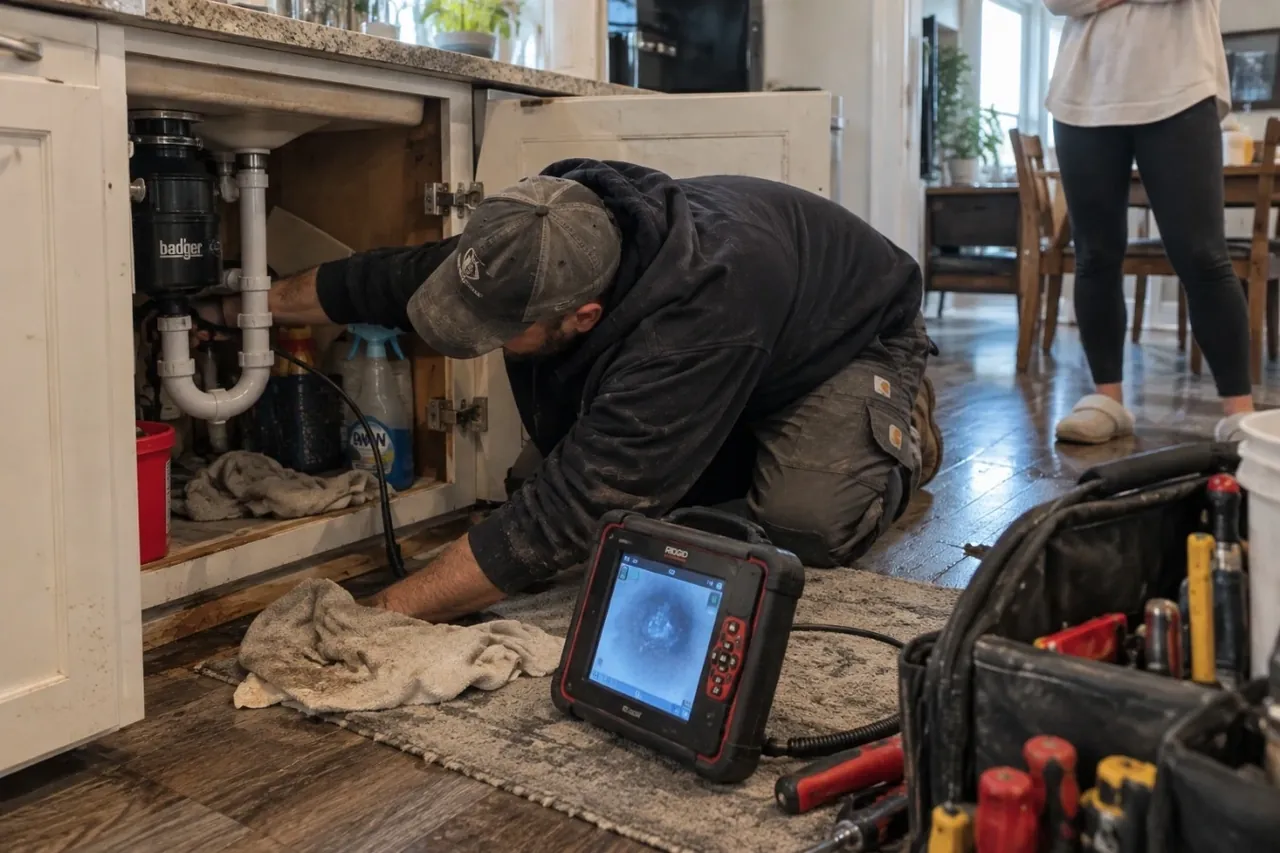 Checking a fixture and supply line
Whole-Home Detection, Not Just Slab Leaks
Fixture & supply-line leaks
Dripping connections and worn supply lines that are not always visible from a quick look under a sink or behind a toilet.
Water heater leaks
Tank and connection leaks that can run for a while in a utility closet or garage before anyone notices standing water.
Irrigation system leaks
Underground sprinkler lines that develop a leak and quietly run up a water bill without ever showing an obvious puddle.
Interior wall leaks
Leaks traveling along a joist or down a wall cavity from somewhere else entirely, which is why tracking the actual source matters.
Why It's Worth Calling a Specialist Instead of Guessing
A leak that seems to be coming from "around the bathroom" can actually be traveling along a joist or down a wall cavity from somewhere else in the house entirely. Tracking the actual source, not just the nearest visible symptom, is what separates an accurate repair from one you end up paying for twice.
Older Plumbing Adds Its Own Risk, Separate From Soil Movement
Clay soil movement is not the only factor behind Austin leaks. In Central Austin neighborhoods like Hyde Park, Clarksville, and Tarrytown, a meaningful share of homes are still running on original cast iron, galvanized steel, or early copper plumbing, and some older properties have polybutylene pipe as well. That plumbing ages independently of what the ground underneath it is doing.
General guidance for homes over 30 years old is an annual plumbing inspection, specifically because gradual pipe deterioration does not always announce itself the way a sudden slab leak does. If your home falls into that range and you have never had one done, that alone is a reasonable enough reason to schedule residential leak detection as a baseline check, not just a response to a symptom you have already noticed.
Frequently Asked Questions
My leak does not seem to be under the slab. Can you still help?
Yes. Residential leak detection covers the full range of places a home can leak, including fixtures, water heaters, irrigation lines, and leaks traveling inside a wall cavity. See how we find them without cutting first.
How is this different from the Slab Leak Detection page?
Slab leak detection focuses specifically on leaks under your concrete foundation. This page covers every other place a home can leak. See our Slab Leak Detection page if that matches your situation more closely.
Not Sure Where a Leak in Your Home Is Coming From?
Call (737) 439-3888 and we will help you track down the actual source.
Call (737) 439-3888