Slab Leak Detection in Austin, TX
A warm patch on an otherwise cool floor, a water bill that jumped with no explanation, or the sound of running water when everything is off. In Austin, that combination almost always points to one thing: a slab leak, and it is the single most common call we get.
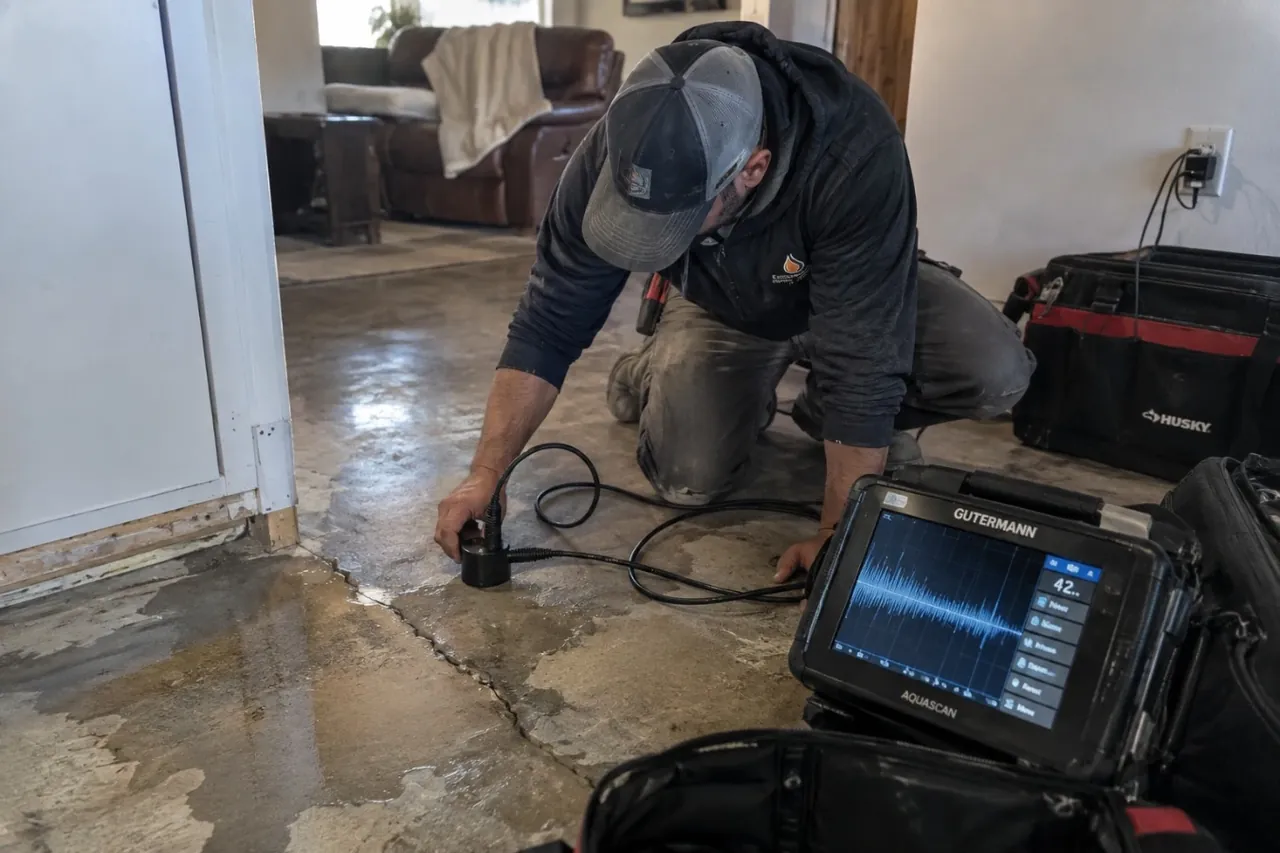 Acoustic listening on a slab floor
A Leak Running Under Your Concrete Foundation
A slab leak is a leak in the water or sewer line running beneath your home's concrete slab. Austin sees more of these than most cities for a specific, well-documented reason: the expansive clay soil the city sits on, often called black gumbo, swells when it is wet and shrinks when it dries. That constant movement puts real stress on the pipe below the slab until a joint finally separates or a line cracks. It is not a manufacturing defect or bad luck. It is the ground itself working against the plumbing, season after season.
This is why slab leak detection shows up as the single most searched and most discussed leak topic among Austin homeowners, more than any other leak-related question in this market.
Signs You May Have a Slab Leak
None of these on their own is proof, but two or more together is worth a call.
- A warm or hot spot on an otherwise cool floor, especially common with a hot-water-line slab leak (read our warm-spot guide)
- A sudden jump in your water bill with no real change in how much water you are using
- The sound of running water when every fixture in the house is off
- Damp carpet, baseboards, or flooring with no obvious outside cause
- New cracks in walls, flooring, or the foundation itself
- A musty smell or visible mold near flooring, especially since mold can start forming within 24 to 48 hours of water reaching damp material
How We Find a Slab Leak Without Guessing
Every step below exists to confirm a leak's exact location before anything gets cut open, not after.
Meter and shutoff test
We confirm whether water use continues with every fixture off and the main valve shut, which tells us whether the leak is really under the slab or somewhere else in the system.
Acoustic and ground-microphone listening
Leaking water under pressure makes a specific sound that specialized listening equipment can pick up and help triangulate, even through concrete.
Pressure testing
Isolating sections of the plumbing system and watching for a pressure drop helps confirm exactly which line is affected.
Cross-confirmation before any cutting
We do not mark a cut location off a single reading. Confirming with a second method before the slab is opened is standard procedure here, not an upsell.
Is Slab Leak Detection Expensive?
Detection (locating the leak) and repair (fixing it) are generally separate line items, and both depend heavily on accessibility, pipe material, and how deep the leak sits.
We do not publish a flat number here because doing so before a technician has actually looked at your situation would be misleading, and you should be skeptical of any company that quotes one sight unseen. See our cost-factors guide for what actually drives the price up or down.
Can I Check for a Slab Leak Myself First?
Yes, and it is worth doing before you call anyone. The meter test, listening for running water, and checking for warm spots are all things you can do on your own. Pinpointing the exact leak location accurately enough to avoid unnecessary excavation is the part that takes equipment and training most homeowners do not have. See our DIY-versus-professional guide for exactly where that line sits.
How Long Can a Slab Leak Go Undetected?
Longer than most homeowners expect, especially when the leak is small, and that is exactly why it ends up causing real damage. By the time it is obvious, it has often been running for weeks or months. Read more about what happens the longer a slab leak goes unaddressed.
Where This Shows Up Most in Austin
Central neighborhoods on older plumbing, Hyde Park (78751), Clarksville and Tarrytown (78703), and Travis Heights and Zilker (78704), see this from aging cast iron, galvanized steel, and early copper lines sitting in clay soil. Newer suburbs including Cedar Park (78613), Pflugerville (78660), and Round Rock see it too, even with PVC and PEX plumbing, because it is the clay soil movement doing the damage, not the pipe material. See our full service area.
Frequently Asked Questions
Is slab leak detection more expensive than regular leak detection?
It can be, since confirming a leak location under a concrete slab typically takes more specialized equipment and a more careful process than a leak that is visible or sitting in an accessible crawlspace. See our cost-factors guide.
Does a home warranty cover slab leak detection?
Coverage varies a lot by provider and plan, so this is worth confirming directly with your warranty company before you assume either way.
Will detection definitely find the leak?
Modern acoustic and pressure testing methods work well in most situations, but no method is guaranteed on the first attempt. Leak size, pipe depth, and background noise all affect accuracy. A follow-up visit is standard procedure, not a sign something went wrong.
Do I need a specialist, or will any plumber do?
Slab leak detection uses acoustic and pressure-testing equipment that general plumbing work does not call for. It is fair to ask directly whether a company does its own detection in house or subcontracts it out.
Think You Have a Slab Leak?
Call (737) 439-3888 any time, 24 hours a day. No forms, no waiting on an email back.
Call (737) 439-3888